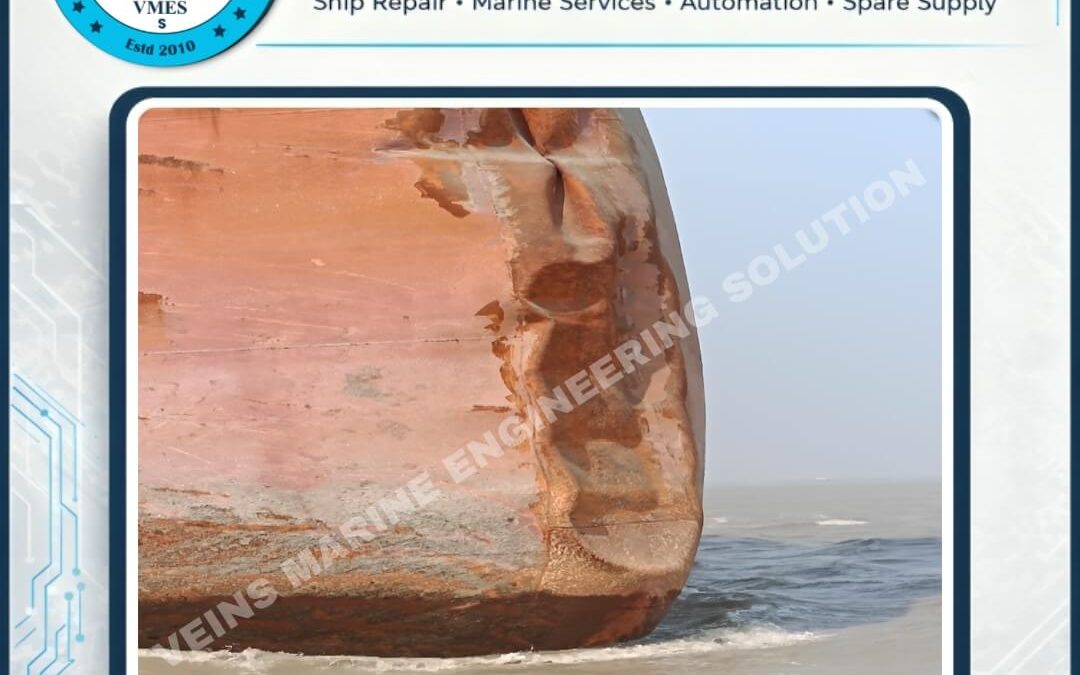
Emergency bow repair MV Vosco Prosper was carried out at Kutubdia Anchorage, Bangladesh following a serious collision at the vessel’s forward bow.
Introduction
Collision damage to a vessel’s bow structure presents immediate risks to watertight integrity, structural strength, and operational safety. In such scenarios, rapid technical response combined with class-compliant execution is critical to prevent escalation and ensure safe continuation of voyage.
This case study outlines the emergency temporary repair of major bow damage onboard MV Vosco Prosper, following a collision at Kutubdia Anchorage, Bangladesh.
The repair was successfully executed by Veins Marine Engineering Solution (VMES) — The Pulse Of Marine Engineering — a professional ship repair company in Bangladesh, under the supervision of Lloyd’s Register.
Incident Overview & Damage Profile
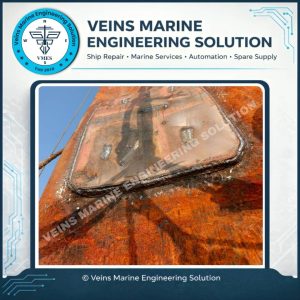
Following the collision, the vessel sustained severe structural damage at the forward bow, specifically in the bulbous bow region. The damage characteristics included:
- Extensive plastic deformation of shell plating
- Structural distortion across an approximate area of 7.0 m × 3.5 m
- Through-thickness breach below the waterline
- Continuous seawater ingress into the affected compartment
The deformation extended beyond the visible impact zone, indicating stress propagation across adjacent structural members, increasing the risk of progressive failure during operation.
Considering the vessel’s trading schedule and planned dry docking, a temporary repair solution was required to restore minimum structural integrity and watertightness for safe voyage.
Rapid Mobilization & Class Coordination
Upon receiving the emergency request, Veins Marine Engineering Solution (VMES) mobilized immediately and deployed a technical team to the vessel.
A joint inspection was conducted in coordination with the attending Lloyd’s Register surveyor to:
- Assess the full extent of hull and structural damage
- Identify active leakage points and high-risk مناطق
- Evaluate structural behavior under loading conditions
- Define a class-approved temporary repair methodology
Based on inspection findings, a controlled temporary repair strategy was approved to ensure compliance with class requirements while maintaining operational continuity.
Key Engineering Challenges
The repair operation involved multiple high-risk technical challenges:
- Severe deformation affecting load distribution at the bow
- Active leakage below waterline requiring immediate containment
- Confined working space inside the bulbous bow compartment
- Limited accessibility for welding, fit-up, and inspection
- Time-sensitive execution under class supervision
- Ensuring structural reliability under hydrodynamic and cargo loading conditions
These constraints required precise engineering judgment, skilled manpower, and strict procedural control.
Repair Engineering Methodology
1. Leakage Control & Structural Stabilization
The primary objective was to eliminate water ingress. The collision-induced hole was identified and sealed using controlled repair techniques, stabilizing the internal condition and enabling further structural work.
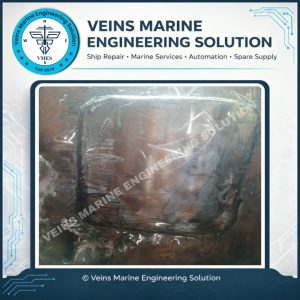
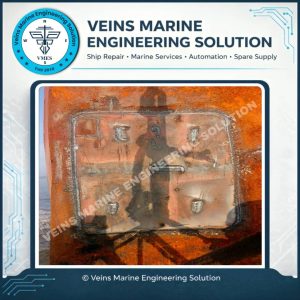
2. Structural Reinforcement Using Double Plate System
To restore structural strength, a double plate reinforcement system was implemented:
- Installation of external steel doubler to withstand hydrodynamic forces
- Installation of internal steel doubler to support load distribution
- Welding procedures executed in accordance with class-approved WPS
This dual reinforcement approach ensured adequate temporary structural integrity.
3. Internal Containment Box & Cementing Arrangement
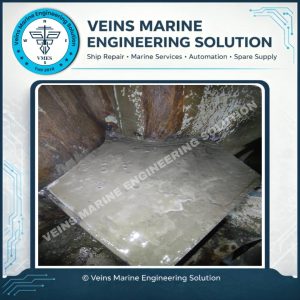
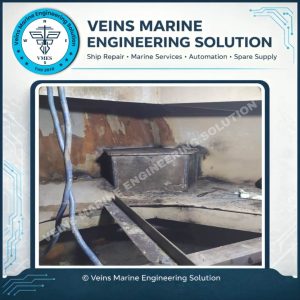
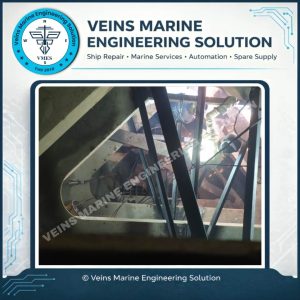
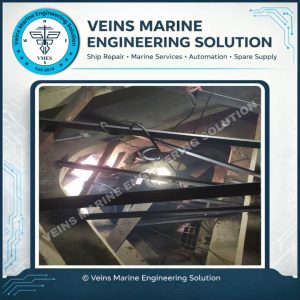
An internal steel containment box was fabricated behind the internal doubler:
- Enclosed area filled with cementing compound
- Creation of a secondary watertight barrier
- Prevention of any residual or progressive leakage
This method is widely applied in temporary hull repair solutions prior to dry docking.
4. Deformation Control & Load Redistribution
Due to extensive bow deformation, multi-directional structural supports were installed:
- Reinforcement members positioned at calculated angles
- Reduction of stress concentration in damaged plating
- Improved resistance against sea pressure during loaded voyage
This ensured structural stability under operational conditions.
Execution Control & Class Compliance
All repair works were carried out with:
- Proper staging and safe access systems
- Controlled welding procedures
- Continuous inspection and quality monitoring
- Strict adherence to class-approved repair methodology
Close coordination with the attending Lloyd’s Register surveyor ensured that all activities met international marine safety and classification standards.
Final Outcome & Operational Readiness
The emergency repair operation was successfully completed with the following outcomes:
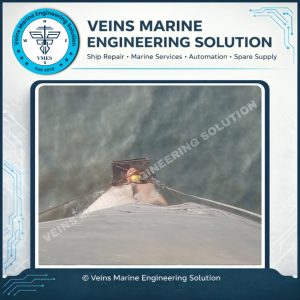
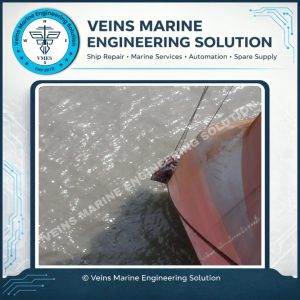
- Complete elimination of water ingress
- Restoration of watertight integrity
- Structural reinforcement sufficient for temporary service condition
- Full compliance with class requirements
- Vessel readiness for safe continuation of voyage prior to dry docking
Why This Project Matters
This project demonstrates the capability of Veins Marine Engineering Solution (VMES) in delivering:
- Emergency ship repair services in Bangladesh
- Class-compliant structural and hull repair solutions
- Rapid mobilization and execution under critical conditions
- Technically sound and reliable marine engineering services
VMES continues to support vessel owners, managers, and operators with A-to-Z ship repair and marine engineering solutions, ensuring safety, compliance, and operational efficiency.
Contact VMES
For emergency vessel repair, marine engineering services, and class-approved ship repair in Bangladesh, feel free to contact:
Veins Marine Engineering Solution (VMES)
The Pulse Of Marine Engineering